 Send Inquiry
 Send SMS
 Call Me Free
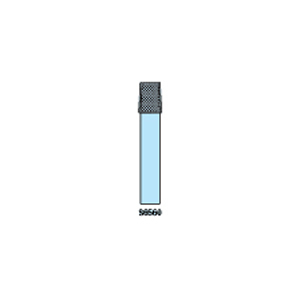
Inner Part Interchangeable Ground Joints
500.0 INR/Unit
Product Details:
- Media Laboratory Chemicals
- Max. Temperature 400C
- Head Code NS (Normal Slope)
- Surface Treatment Painted
- Material Stainless Steel
- Technique Forging
- Type Others
- Click to View more
X
Inner Part Interchangeable Ground Joints Price And Quantity
- 500.0 INR/Unit
- 1 Piece
Inner Part Interchangeable Ground Joints Product Specifications
- 400C
- Atmospheric
- NS (Normal Slope)
- Stainless Steel
- Socket
- Reducing
- Painted
- Laboratory Chemicals
- Others
- Forging
- Clear/Transparent
- Yes
- Thermal Shock, Chemical Corrosion
- Yes
- 10/19 to 34/35
- Laboratory Glassware Assembly
Inner Part Interchangeable Ground Joints Trade Information
- 15-20 Piece Per Day
- 7 Days
- Yes
- Sample costs shipping and taxes has to be paid by the buyer
- Corrugated and Wooden Box.
- All India
Product Description
Stainless steel made Inner Part Interchangeable Ground Joint is accessible with painted surface. Forging technique has been followed to design this ground joint. Size of this product differs as per application needs. Its operating temperature is around 175 degree C. It is chemically protected. Nut of this Inner Part Interchangeable Ground Joint rotates in clockwise direction towards flask to extract. Quality of this product has been verified on the basis of its durability, strength, longevity, breakage resistance attribute and design precision.
Inner part only, interchangeable.
|
Joint size |
Mrp/pc euro |
|
10/19 |
1.65 |
|
12/21 |
1.65 |
|
14/23 |
1.65 |
|
19/26 |
1.65 |
|
24/29 |
1.65 |
|
29/32 |
2.35 |
|
34/35 |
2.75 |
|
40/38 |
4.85 |
|
45/40 |
5.45 |
|
50/42 |
5.75 |
|
55/44 |
6.65 |
Versatile Joint Sizes for Precise Laboratory Fit
These interchangeable ground joints are available in a range of sizes, from 10/19 to 34/35, allowing for a precise fit across various laboratory glassware assembly applications. The reducing design makes it easy to connect glassware pieces with different joint diameters, ensuring flexibility in experimental setups and efficient workflow.
Engineered for Superior Durability and Safety
Manufactured from stainless steel using a forging process, these joints deliver exceptional resistance to both chemical corrosion and thermal shock. Capable of withstanding temperatures up to 400C, they ensure reliable performance during high-temperature or corrosive laboratory operations, thus guaranteeing safe and continued laboratory use.
Safe, Reusable, and Easy to Maintain
With their autoclavable, reusable construction and painted surface treatment, these ground joints offer convenience and cost-effectiveness. Their clear, transparent appearance aids visual inspections, while the socket connecting type allows effortless assembly and disassembly when required, streamlining laboratory processes.
FAQ's of Inner Part Interchangeable Ground Joints:
Q: How are the Inner Part Interchangeable Ground Joints installed in laboratory glassware setups?
A: These joints feature a socket connection and reducing shape, enabling easy integration between glassware components of varying joint sizes. Simply match the correct sizes and connect them by gently inserting one into another, ensuring a secure and leak-free assembly.Q: What advantages do these ground joints offer compared to traditional glass connectors?
A: The stainless steel construction provides superior durability, greater tolerance to thermal shock, and enhanced chemical resistance. Additionally, their autoclavable, reusable design makes them more cost-effective and long-lasting than traditional glass connectors.Q: When should I choose the reducing shape ground joint over a standard connector?
A: Reducing ground joints are ideal when you need to connect laboratory glassware with different joint diameters. They provide a secure seal without the need for additional adapters, making experiments involving multiple apparatus sizes more efficient.Q: Where can these interchangeable ground joints be utilized?
A: They are primarily used in laboratories across research institutions, universities, and industries where customizable glassware assemblies are required for chemical reactions, distillation, or other experimental procedures.Q: What is the process for cleaning and maintaining these joints?
A: After use, the ground joints can be thoroughly cleaned with standard laboratory detergents and water. Being autoclavable, they can also be sterilized at high temperatures without degrading, ensuring contamination-free reuse in demanding applications.Q: What are the main benefits of using these ground joints for laboratory applications?
A: Key benefits include resistance to chemical corrosion and thermal shock, reusability, easy assembly, and compatibility with a range of glassware sizes. This ensures reliable, safe, and flexible laboratory operations.Tell us about your requirement

Price:
Quantity
Select Unit
- 50
- 100
- 200
- 250
- 500
- 1000+
Additional detail
Mobile number
Email

Other Products in 'Ground Joints' category

Contact Details
GST : 24AAMFS4224J1Z3

- E-22 & E - 56, Sardar Estate, Ajwa Road, Vadodara - 390019, Gujarat, India
- Phone : 07313726333

- Mr. Ashok (Director)
- Mobile : 07313726333
- Send Inquiry
 Send Inquiry
|


 |
STAR SCIENTIFIC GLASS CO
All Rights Reserved.(Terms of Use) Developed and Managed by Infocom Network Private Limited. |
